Skills are for People too
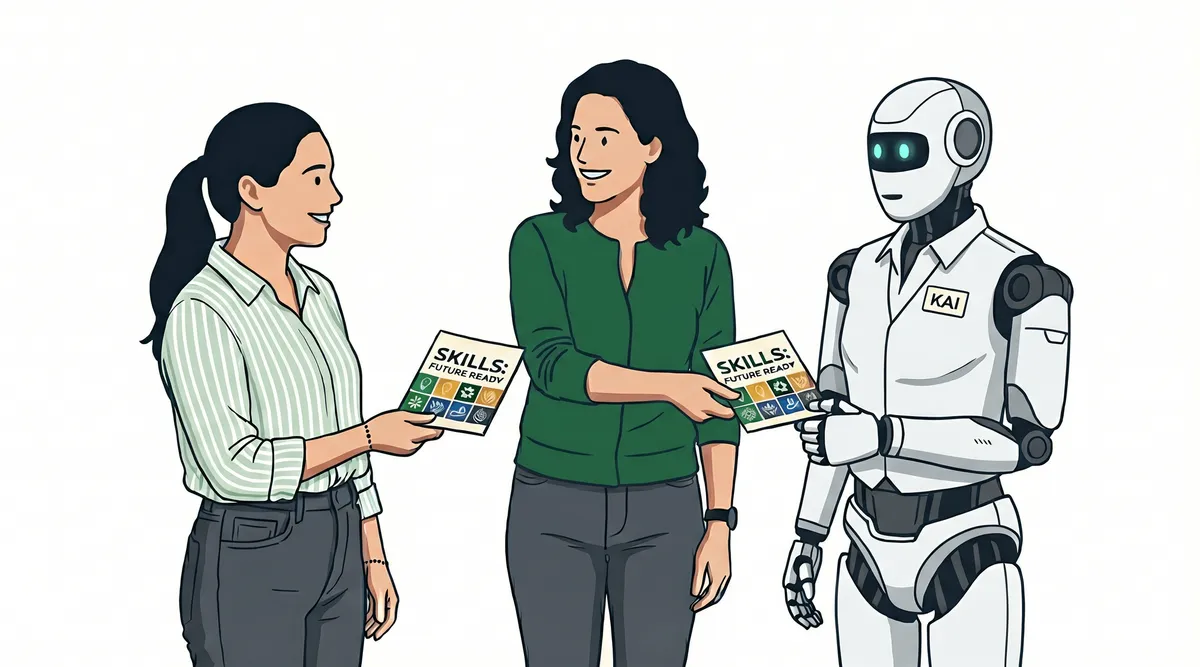
The great irony of the AI era is that organizations are finally taking documentation, onboarding, and clearly defined skills seriously; but for AI, not people. Organizations now carefully write skills and documentation, and define exactly what “good” looks like, all so their AI can perform. Yet most of these same organizations overlook all of it for their people. For the first time in history we are managing two forms of intelligence (intelligent people and intelligent machines), and while their characteristics differ, their learning mechanisms are similar. Unfortunately, by emphasizing the management of machines, organizations overlook how applying the same ideas to people would achieve an even bigger, compounding effect.
Similar Intelligence, Different Implementations
Large language models proved that intelligence isn’t unique to biology. Take the architecture of neural networks, feed it enough data at a large enough scale, and intelligence emerges. We now have two working implementations of the same underlying architecture for intelligence: a biological one and a machine one.
What differs are the characteristics of their intelligence. Human intelligence is limited in focus and slow to develop, but it persists and stays consistent over long durations. Machine intelligence is the inverse: vast in knowledge and with instant recall, but shallow in focus and inconsistent over long durations.
This is why an over-fixation on AI creates a gap in an organization’s ability to build durable, large-scale products. AI can easily ship narrow solutions across a myriad of domains, but building something complex, over a long duration (i.e. years), still requires human intelligence. And last time I checked, most organizations don’t plan on dying off after a few months, so they shouldn’t be neglecting developing their human intelligence. To stay competitive, you need a deliberate strategy for both types of intelligence.
Similar Learning Loops
The similar intelligence architecture means the same techniques leaders are liberally applying to AI apply to people too. When you compare them side-by-side, the disconnect with how we approach human upskilling becomes clear:
| Challenge | AI | Human |
|---|---|---|
| Don’t know how to do a task | Create a Skill | ”Shouldn’t you already know this at your level?” |
| Don’t know how something is set up | Improve context files and documentation | ”You have the docs, just go figure it out.” |
| Inconsistent in performance | Create testing harness and feedback loops | ”I need you to be more consistent.” |
| Struggles on large tasks | Create a plan with clear tasks and validation steps | ”Why didn’t you ask for help earlier?” |
| Can be lazy and take shortcuts | Clearer expectations and fewer ways to take shortcuts | ”I need more attention to detail from you.” |
Do you see the issue? When AI underperforms, we change its environment so it can succeed; when a person underperforms, the problem is the person. And despite the much higher cost of having a person on the team, they end up with the weaker environment to support their performance. This neglect costs more than it looks: a skilled person can more effectively use AI in their role, so people with undeveloped skills also dampen the value they get from AI.
The Gap in People Management
The reason people management looks so different from AI management comes down to a long-running habit of managing by goals and outcomes. The underlying philosophy goes something like this: a business cares about outcomes, so we should measure against outcomes, so everyone should set goals, and then we should hold people accountable to those goals. It sounds reasonable, which is exactly why it has persisted.
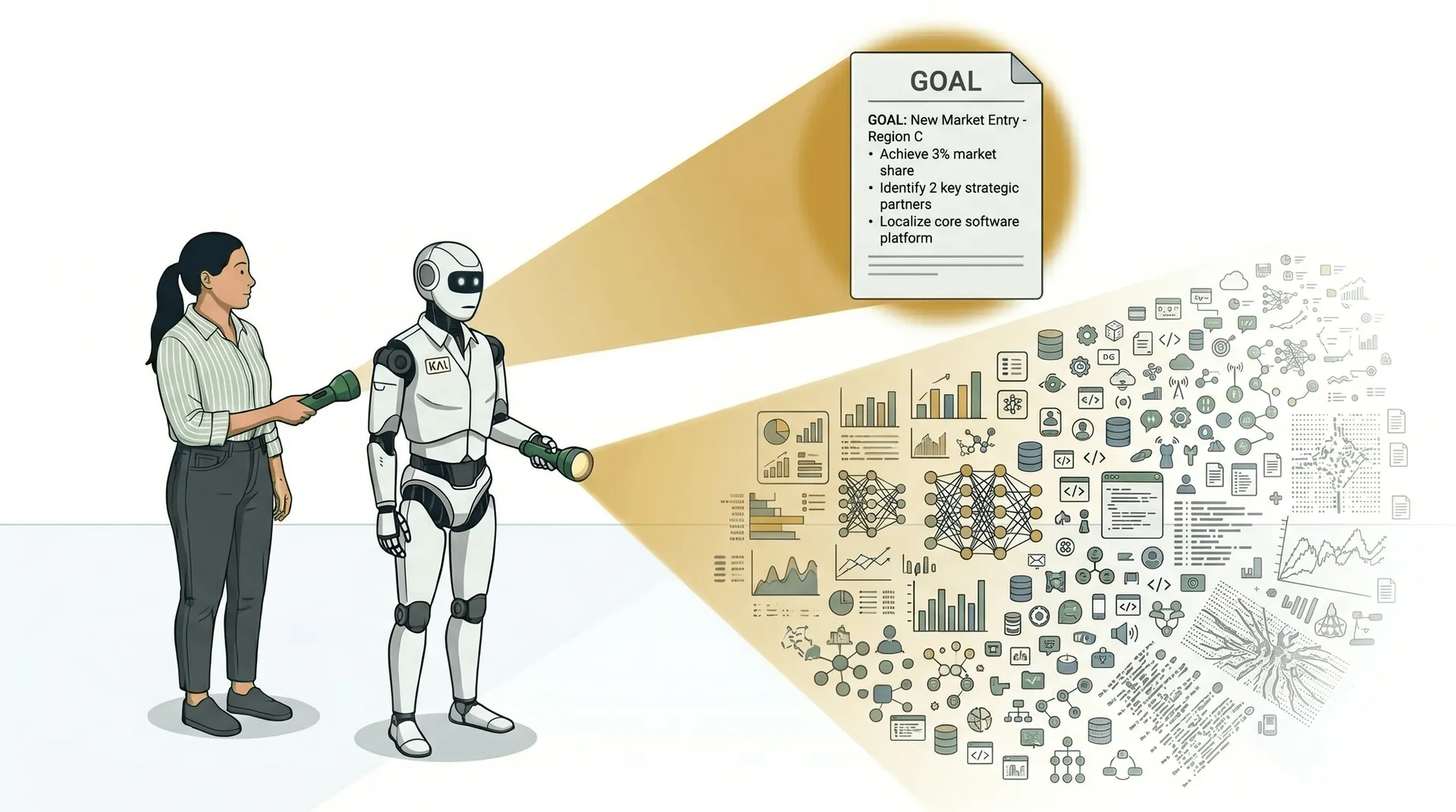
Watching AI work exposes the flaw. If all you hand AI is a goal (the equivalent of a one-shot prompt), your outcomes will vary wildly and usually be subpar. Goals give direction, but it is skills that determine your success rate at achieving goals. That’s true for AI, as it is for people. Goals alone were never enough; we just couldn’t see it as clearly before AI emerged.
So let’s simplify this down to a single principle for managing in an organization made of both humans and AI:
Not goals, but skills. With this one principle, we can develop our AI and human teams in a more consistent manner.
A Unified Approach
Once skills are the unit of management, the approach for both AI and people becomes the same handful of steps. Start by understanding what you actually want from a person or agent. Define the skills you expect from the person or agent, with clear, observable definitions, and references (e.g. checklists, job aids, playbooks) that explain how to execute each one. Make sure both the person and AI know exactly where to find their skill expectations and supporting documents. Then build feedback loops to assess each skill’s performance.
| Feedback Loop | AI | Human |
|---|---|---|
| Self-managed |
|
|
| Expert Feedback | Comment on artifacts produced | Coaching Sessions |
Positively reinforcing mastery of a skill matters too. For people, recognizing skill mastery as it’s demonstrated goes a long way; social reinforcement, especially from someone respected and in a position of authority, is highly effective. For AI, when you like how something was done (especially if you had to give it feedback during the session), ask the AI to persist the feedback into its own skills and context for future sessions.
The compounding benefit is that this approach doesn’t just help your people and your AI separately; it helps them together. A person with skill mastery in their role can use AI far more effectively, and AI with up-to-date skills and context produces higher quality outputs. Developing people increases what AI gives you.
Tip: People-Specific Benefits
While I’ve emphasized the skill-development loop above, treating “skills as the unit of management” simplifies, and even automates, various routine managerial activities:
- Job descriptions: with skills well defined, you always have an up-to-date job description on hand, ready to generate into a job posting when you need it.
- Performance reviews: if you’re consistently giving feedback on skills, you are regularly collecting performance data, which AI can draft into a performance review when you need it.
- Promotions: when someone has demonstrated mastery of their own role and sufficient skill mastery of the subsequent role, the case for a promotion is more data driven than political.
In short, using skills as a unit of management provides a solid foundation to manage both AI and people with, and its structured approach lends itself well to automation and AI delegation for routine HR activities.
A Solid Foundation to Build On
Management gets easier when we apply a consistent approach to skill management for AI and people. Before Anthropic made “skills” a regular talking point, it was hard to convince leaders that skills are foundational at all; it was always easier to wave problems away as a “talent” issue or a “goal setting” issue. Fortunately, AI has aligned us all on a simple point: even the smartest models, with the right goals, fall short without the right environment, clear expectations, and skills. People are no different.